Who will be there when family care is gone?
For many adults with cerebral palsy, the most frightening question is not medical. It is personal: who will notice if I am hungry, unsafe, isolated, neglected, or alone? We want to build answers before that moment arrives.
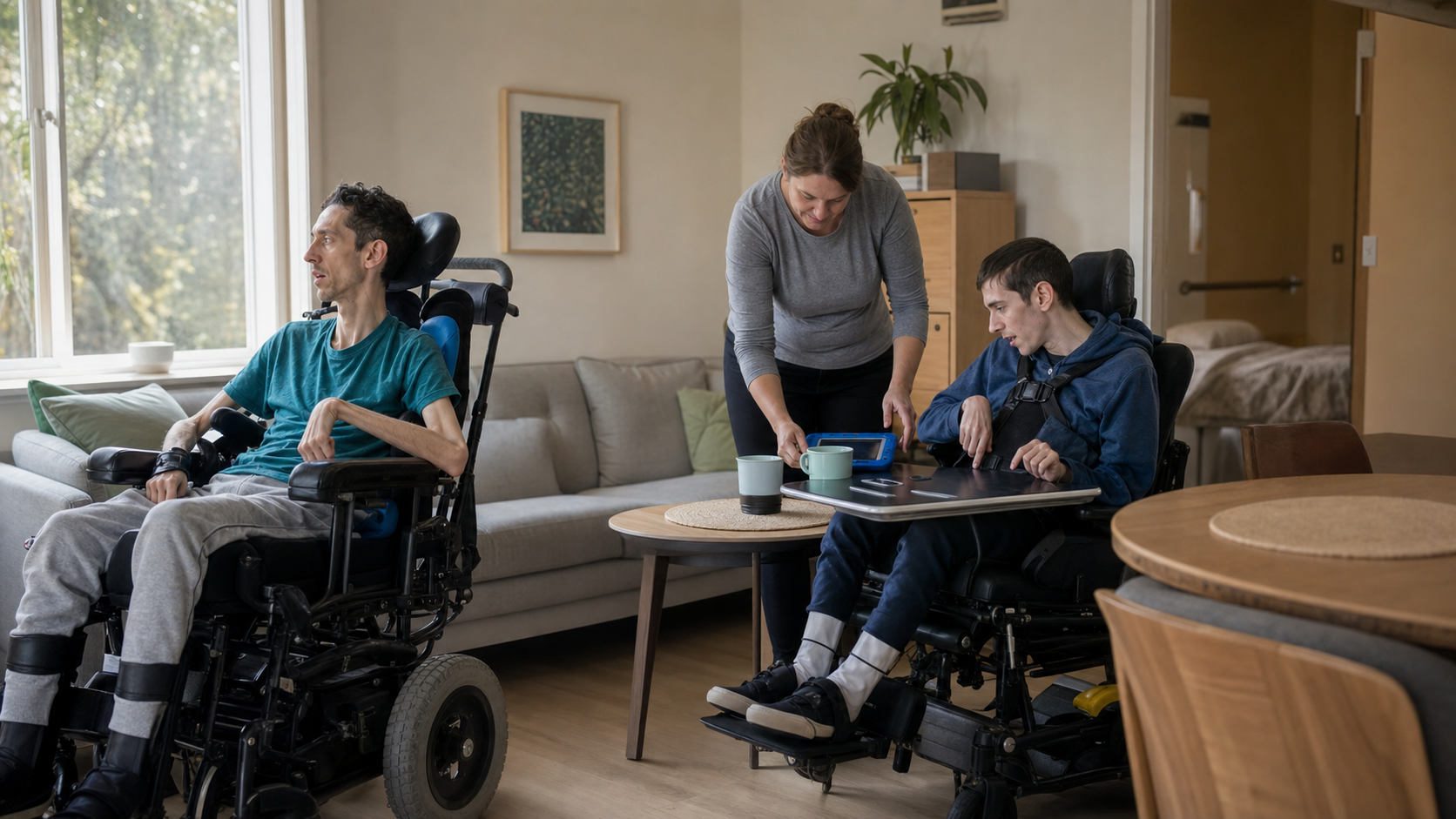
A supported home should feel like a life, not a storage place for a disabled body.
Our long-term vision includes supported community living for people with cerebral palsy who lack reliable family, caregiver, housing, financial, legal, technological, or community support. The aim is not to hide people away. The aim is to create accessible homes connected to real neighborhoods, relationships, safeguards, and meaningful daily life.
Spaces designed around mobility, communication, safety, privacy, and daily choice.
Care coordination, trained helpers, technology, meals, transportation, and health follow-through.
Documented support, rights protection, dignity, and careful review before major decisions.
Friendship, volunteering, learning, celebrations, and ordinary community life.
A humane safety net does not appear by accident.
Supported living requires planning, housing resources, caregivers, technology, legal structure, transportation, and ongoing accountability. Donations help move this vision from emergency improvisation toward a stable model of community care.