Communication first
A person who cannot reliably speak still has opinions, pain, humor, fear, consent, refusal, and dreams. Communication access is a rights issue, not a luxury accessory.
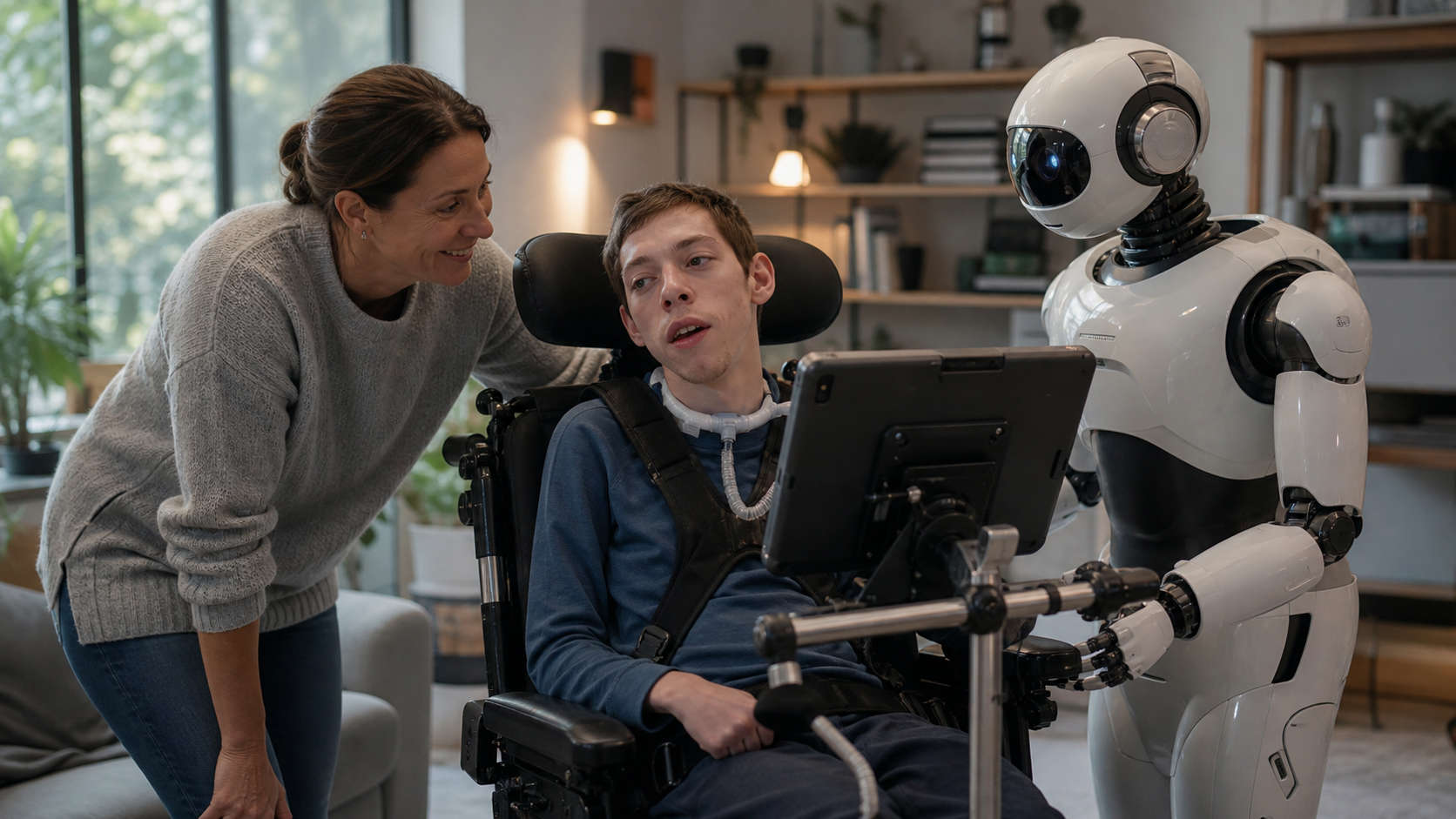
Assistive technology can change what independence means for a person with cerebral palsy. Communication devices, smart homes, adaptive systems, robotics, and future neurotechnology can help people express choices, reduce danger, and participate in daily life.
A person who cannot reliably speak still has opinions, pain, humor, fear, consent, refusal, and dreams. Communication access is a rights issue, not a luxury accessory.
Environmental controls, monitoring, safety tools, and accessible interfaces can reduce dependence and help people control lights, doors, temperature, alerts, and daily routines.
Humanoid and adaptive robots may one day help with reminders, reaching objects, communication, companionship, safety checks, and caregiver gaps while keeping humans responsible for care.
As neurochip and brain-computer interface research develops, people with severe movement and communication limitations must be included ethically, safely, and with full respect for consent and privacy.
Wheelchairs, positioning systems, braces, switches, mounts, access devices, and repair support can determine whether a person stays active or becomes trapped.
Technology is useful only when it increases choice, safety, communication, and belonging. It must never become a cheaper way to abandon people.
We can be ambitious about robotics and neurotechnology without treating vulnerable people as experiments. Our work must protect consent, privacy, safety, medical judgment, participant choice, and human connection.
Technology should expand independence.
Technology should support caregivers, not erase responsibility.
Technology should make people more visible, not easier to ignore.